

What You're Getting Wrong About Catholic Devotion to Mary

A Brief Story
Imagine a group of Christians who have lived out their faith devoutly within their community for generations. This community is rather rural, with only modest educational structures. Lacking strong education, members of this community often don’t understand the nuances of theology and are thus sometimes taken advantage of by popular charlatans or the well-educated outsiders who occasionally interact with them. Nevertheless, the community is characterized by a great devotion and zeal for the faith, leading to many pietistic revivals and movements within their church across the generations. While often a mixed bag, these revivals produce many holy men and women who enrich the life of the church, both locally and on a global scale.
However, in the cities and universities, great technological innovations and methodological advancements are being applied to the study of Christianity. Those educated in these new methods now look with an ever-increasing disdain for those rural, less-educated communities for indulging in beliefs and practices that they deem backwards and misguided manifestations of Christianity.
Things begin to reach a breaking point, as these novel methodologies come to dominate major Christian institutions. Many Christians are shocked by what they learn through these technological advances. They begin to reject many of the beliefs and practices that had sustained their communities over the years, hoping by this to rediscover “historic Christianity.” Still others are horrified by these developments and become ever more calcified in their old beliefs. They insist that to abandon these convictions is to undermine the very foundation of their faith. These people are often belittled by outsiders, including other Christians, who see in their beliefs the root of a myriad of social and ecclesiological ills.
If you are a conservative-leaning Protestant, especially in America, this story may feel deeply familiar to you. Textual criticism and liberalization in theology has overrun institutions of higher education. For many, to be educated is to be exposed to ideas which challenge your basic understanding of what it is to be a Christian. Increasingly, liberal Christians seem to show a disinterest in what you see as the basics of the Gospel, and fundamental tenets of faith like the inerrancy of Scripture feels constantly under threat. You know this story well; many of you and/or your families live this story every day.
But I actually had a different group in mind…
The technological advancement: The printing press
The intellectual movement: The Enlightenment
The group: Catholic peasants
The questioned beliefs: Devotion to Mary and the saints
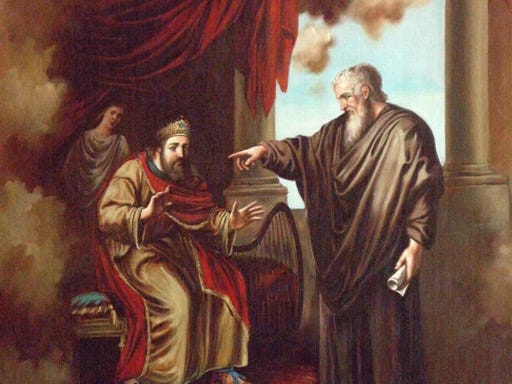
Their tormentors: Well, to quote the prophet Nathan, “You are the man!”
Or at least your intellectual forebears and heroes were. Maybe it’s the recent celebration of “Reformation Day,” maybe the publication of Mater Dei Fidelis, but I think this idea is important and very underappreciated: conservative Protestants have more in common with the Catholic peasantry of the Enlightenment than they would like to admit.
Before I start, it is important to keep in mind that while I will refer to the simplicity or lack of education common within these two groups, I don’t mean this as a condemnation. Christ calls us to a simple faith, and Paul affirms that “God chose the foolish things of the world to shame the wise” (1 Corinthians 1:27). While I think education is important and can be the expression of a devout pursuit of God, a simple holiness means more than any academic achievement.
A Simple Faith
With that out of the way, both Enlightenment-era Catholic peasants and modern conservative Protestants are largely regarded as unintelligent, backwards rubes by outsiders. Furthermore, both groups characteristically rejected the “best scholarship” of their day.
As is commonly known, prior to the invention of the printing press, access to books was restricted to the rich and academic classes. This left the uneducated to develop their theological theory and practice largely independent of scriptural terminology. Furthermore, the scriptural passages that were taken to justify many Catholic pious practices were taken from the Latin Vulgate. When the Greek manuscripts were recovered, many of those translations were found to be faulty.
It is hard to miss the parallels with modern scholarship. Modern scholars now extensively question the origins, context, and meaning of many passages. From commonly known challenges like the age of the earth and the synoptic problem, to more obscure issues like the role of Marcion in the development of the canon or the influence of the Septuagint on contemporary Jewish theology, modern methods raise all kinds of challenges for beliefs and ideas that we originally took for granted.
Now, the common conservative response (which I agree with!) is that these contradictions are over-exaggerated and can be reconciled. At its best, the goal of conservatives has been to weather the various scholarly fads and eventually rebuild a theology that respects the historical data without abandoning the core tenets of our beliefs and practices. But keep in mind: agree or disagree, that’s what Enlightenment Catholics did! We held steady; we didn’t jump to conclusions, and we rebuilt the scriptural and historical foundations that had been lost.
Against the Elites
As I suggested above, the early Reformers correspond to modern elites in this analogy—a role they fit quite well, in my humble opinion. Luther and Calvin both belonged to the educated class. Calvin was a lawyer, Luther justified his public ministry by appealing to his post as a university professor! Ironically, this “upper-middle” demographic is precisely the one that conservative Protestants now find themselves arrayed against.
One might respond that while Luther and Calvin may have been among the educated, it was their democratizing instinct of spreading the Gospel to the people that makes the charge of elitism unfounded. Of course, we might say the same about modern scholarship. For all their faults, modern scholars have risen as part of and presided over the most significant democratization of higher education in human history. People have more opportunity to study the theology and history of the Scriptures than ever before! If we want to deny the elitism charge to the Reformers, we must also consider whether our critiques of modern elites are not unfounded.
But the Reformers weren’t arrayed against the peasantry! They were challenging the Pope in defense of the people! On the contrary, didn’t our current educated class conquer the institutions first? Weren’t spectacles like the Scopes Monkey Trial about democratizing education and freeing rural classes from fundamentalism and poor scholarship? Isn’t the rallying cry of modern cultural elites “democracy”? Everyone wants to be on the side of the downtrodden, even if they have to themselves trod on a few cowpokes to do it.
The Myth of Top-Down Imposition
The converse point is also interesting. Just as the Reformers’ democratic bona fides should be viewed with some skepticism, so should the role of the Catholic Church hierarchy in the development of practices such as Marian devotion. The Church didn’t spin its liturgical calendar out of whole cloth—it emerged as a formalization and guiding of pious practices that had already developed organically among the faithful. The Catholic Church’s top-down canonization process wasn’t formalized until after the Reformation! Even to this day, the cult of the saints is a remarkably bottom-up affair.
In fact, the Catholic hierarchy had a rather tendentious relationship with popular piety throughout the medieval period, trying to balance supporting the fervor and faith it produced while curbing heretical excesses.
Once we recognize devotion to Mary and the saints as bottom-up rather than top-down, it recontextualizes much of the debate throughout the Reformation and Counter-Reformation. For instance, the formulations of the Council of Trent, when read in the proper light, are a defense of popular piety, not chiefly an attack on Protestants.
Take this section from Trent’s 25th Session:
“...but that they think impiously, who deny that the saints, who enjoy eternal happiness in heaven, are to be invocated; or who assert either that they do not pray for men; or, that the invocation of them to pray for each of us even in particular, is idolatry; or, that it is repugnant to the word of God; and is opposed to the honour of the one mediator of God and men, Christ Jesus; or, that it is foolish to supplicate, vocally, or mentally, those who reign in heaven...”
(Full text available here).
Look at this passage! It is condemning the condemnation of popular pious Catholic practice. This is a defensive maneuver. The Church is standing up in defense of those who were being attacked, condemned, and even damned by the Reformers for practicing their faith. I bet you wish your institutions did that for you instead of happily telling you not to let the door hit you on the way out. Catholicism is so frickin’ awesome!
Saints with Strong Marian Theologies
This is also the lens through which we need to view figures like Louis de Montfort. For all the shade he’s been receiving recently, he and others like St. John Vianney spent their lives ministering to poor, uneducated French peasants and writing to defend them and their devotions to Mary and the saints. Do they sometimes use language that makes me uncomfortable or engage in speculative theology I’d disagree with? Yes, but that doesn’t mean they aren’t saints or that we shouldn’t take their theology seriously.
To illustrate, consider the attitude of conservative Protestants toward a figure like William Lane Craig. The guy literally espouses a Christological heresy and rejects Divine Simplicity, but I doubt if he died tomorrow any conservative Protestant is convinced he’s going to hell. The point is that the scope of doctrinal—let’s call it “creativity”—that conservative Protestants are willing to tolerate is pretty large if the guy is willing to defend you and your faith. I’m not even saying it’s a bad thing. Just something to be aware of next time you’re reading a Catholic treatment of Mary that’s giving you a spasmodic urge to clutch some pearls.
Objections
Protestants are defending the Word of God (TM); Catholics were just clinging to the traditions of men
The obvious response to this is that it begs the question. Furthermore, “you should have [this idiosyncratic reading of] the Bible as the foundation of your faith” is less compelling in a setting where a large swath of the general population is illiterate and you have limited access to the Bible itself. Of necessity, the Bible played a more limited role in the average Christian’s life historically than it does today.
The aspects of the faith that were accessible to the masses were the exact things which Protestantism largely tried to do away with. Thus, if you were a conservative in the Enlightenment, you would probably have more sympathy with the Catholic cause.
Moreover, this objection obfuscates a larger and more telling point: the disagreement was not about whether the Bible was authoritative. Rather, it was a methodological question regarding how to understand both key passages in the text and the text as a whole.
As I mentioned above, the reintroduction of Greek and Hebrew manuscripts drove much of the theological crisis that surrounded the Reformation. Doctrines which had unambiguous scriptural backing in the Vulgate, such as Mary’s sinlessness (“gratia plena”), became much more shaky in the original Greek. Thus, it was the introduction of new information, and methods for evaluating and studying that information, that really divided the theological conservatives and liberals during the Enlightenment.
When viewed through this lens, the parallels between the Enlightenment and the advent of Biblical criticism become much more stark. In both cases, we have new information and methods challenging traditional ways of reading and understanding the Biblical text and its relation to Christian practice.
Just as Protestants claimed that Catholic beliefs and practices were incompatible with a proper reading of Scripture, modern textual scholars now claim conservative approaches to Scripture are unsupported by a careful reading of the text. Indeed, in both cases “education” has been offered as the solution to overcoming these backwards fictions clung to by the unwashed masses. While there are certainly distinctions to be made, the similarities are too striking to ignore.
The Veneration of Mary and the Saints Keeps People from Jesus!
This objection usually comes in one of two, contrary flavors. The first is the idea that such veneration is just paganism dressed up in Christian garb. To be honest, this objection never made much sense to me. Suppose it’s true. Suppose veneration of the saints were derived from pagan practices. Is it better (from the Christian perspective) for people to be engaged in Christianized pagan practices, or purely pagan ones? The answer seems to be obviously the former.
Can we just ignore these expressions of faith because they weren’t suitably Baptist? They weren’t Reformed enough? Should the Church have persecuted any expression of the faith that had even a hint of a relationship to paganism? If they had done that, it’s highly unlikely that Christianity would have had the success it did.
Furthermore, it seems obviously the case that Christianized pagan practices draw someone closer to Christ than purely pagan ones. Given this, the objection that veneration of the saints kept people from Jesus would be obviously false—it brought them closer to Jesus by default!
This highlights another uncomfortable modern parallel. The term “pagan” derives from the Latin term for peasant. Just as today, Christianizing Rome was divided between city and country. In that era, Christians were the city-folk in late antiquity. I think it is a great credit to Christians that they allowed what was good in Roman or German paganism to remain in Christian practice. It shows a respect for the parochial that modern cosmopolitans quite lack.
The other common objection is that the veneration of saints may have been acceptable when moderate, but it later developed into abuses. I want to reiterate that this objection is contrary to the first—you can’t have it both ways!
Furthermore, it is again important to remember that low literacy rates and limited access to books precluded the Bible from being readily accessible. Without Scripture, how were these peasants to connect with God? By engaging in pious practices, including those which honored Mary and the saints, of course!
When given the alternatives, the conclusion that such practices impeded (rather than sustained) people’s relationship to God is almost laughable. Even after the Bible was readily available in the vernacular, it strikes me as deeply anti-conservative to just cast aside the centuries of practices that sustained the faith while Scripture was a luxury of the wealthy and educated class.
Taking Stock
If you are a conservative Protestant who has read this far, thank you! What should you take from all this?
First, even if you think you are right, you ought to appreciate the fact that you now happen to find yourself in the same situation as many of the people in history that you most disdain. Even if you think that the Reformation was a good thing, you ought to realize that you yourself have been on the receiving end of a “Reformation,” and while I am only an outside observer, you don’t seem to have enjoyed it very much. The historical figures you celebrate did to rural Catholic peasants what modern universities have done to you.
The other thing you should take from this is an understanding of many of the more traditionalist Catholics who were upset by Mater Populi Fidelis. These are the heirs of medieval piety, and they, like you, face significant antipathy from the academy.
Given this, it is quite natural for them to feel in response to Mater Populi Fidelis something like what the elder son must have felt in the parable of the prodigal son. What is for many a beautiful part of church history has been discouraged in order to avoid giving scandal to people like you, who have not remained faithful through the years. More challenging still, it is done for a group that has not even returned to communion with the Church, but merely to remove barriers that some might do so. The wayward son has received, and it is perhaps understandable that the faithful son might complain.
In the end, I hope this post fostered some appreciation and sympathy for Catholics throughout history—that you see in them a reflection of yourselves, and that simple faith which must always be honored within the Church.